
Orientation is Everything

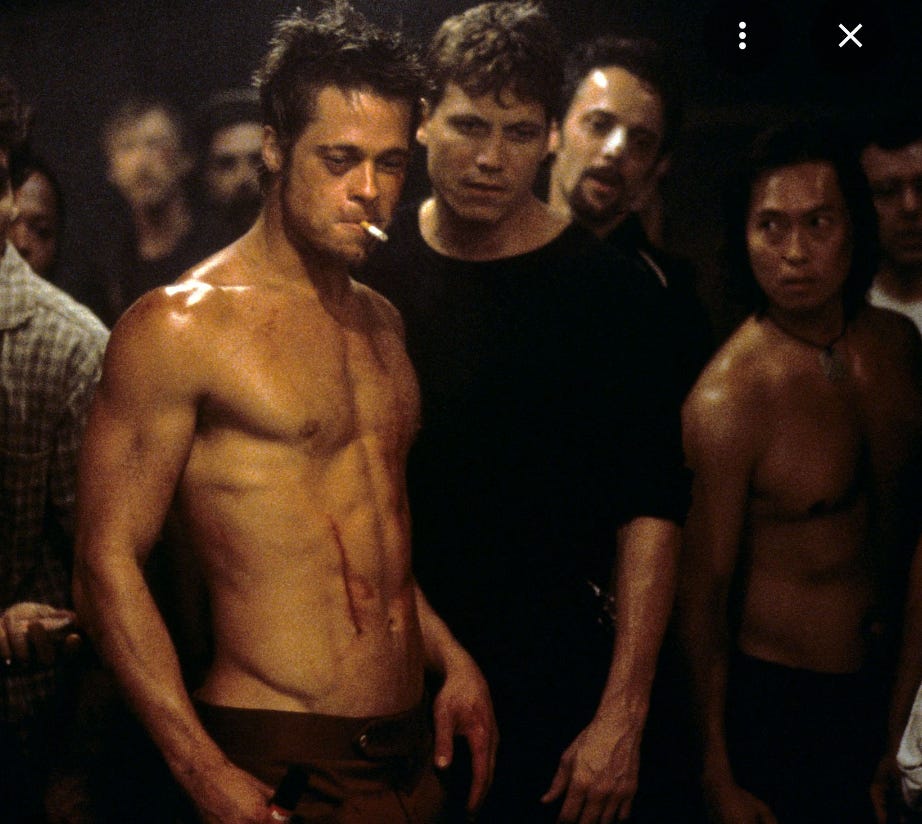
“The first rule about Fight Club is you don’t talk about Fight Club.”
“The second rule about Fight Club is you don’t talk about Fight Club.”
I quote Fight Club to stir something enigmatic—something whose inner architecture we don’t fully know.
My girlfriend and I have a book club. Her first rule was that you cannot talk about the book until you reach the place where you are allowed to talk about it. But who knew how desperately we needed this ritual? It wasn’t until I was consumed with school that we began to feel the slow drift into oblivion.
She pulled me to the side one day. You could feel the hesitation, the fear—there was something deep threatening both of us. It was the mundane, the everyday that could go on without us. We could leave each other behind; there was no necessity. I could go on studying, and she could go on with work, kids, and wherever life leads.
The talk revealed a wound that was not our own, not of our own making. It was not about differences or impasses. Rather, it was the arrival of a cold indifference. Her fear—our fear—was that we could become adjusted to a life without each other. Again, this has little to do with difference or impasses. Honestly, difference is what makes us feel alive.
Let’s return to Fight Club for a moment. No one cares about winning or losing. It’s the idea that fighting makes you feel alive, and yet nothing is solved. When people think about fighting, they assume there’s a winner and a loser, or that someone is wrong. Thank God, my girlfriend and I have never thought that way.
The truth of the matter is not about raw aggression, but about how aggression is meant to be tied to a sacred ritual—a holy day, a necessity. Our aggression is to fight for something, but not just anything. It has to be different. It has to be sacred.
Nowadays, my girlfriend tells me the book club is a must. It is our survival—our holy communion where the mundane world is partitioned off. We rest. We laugh. We talk. And the talk is not about the everyday. It is about what we are not otherwise afforded—it is the speaking of a sacred language that we are not allowed to speak unless both of us are present.
The funny thing is how mundane it looks from the outside. We are just a couple sitting at Denny’s, talking about Fight Club. There are many stories in the Bible about divine hiddenness. When Moses performed miracles, the Pharaoh saw magic and trickery. When people saw Jesus, some saw a heretic, others the Son of God.
I cannot say this enough: orientation matters. A holy day changes everything.
I’m not sure I even get this. But there is something deep that resonates.